

Groundbreaking Solar Panel Production Technology Explored with Chinese Representatives at the Yazd Chamber of Commerce
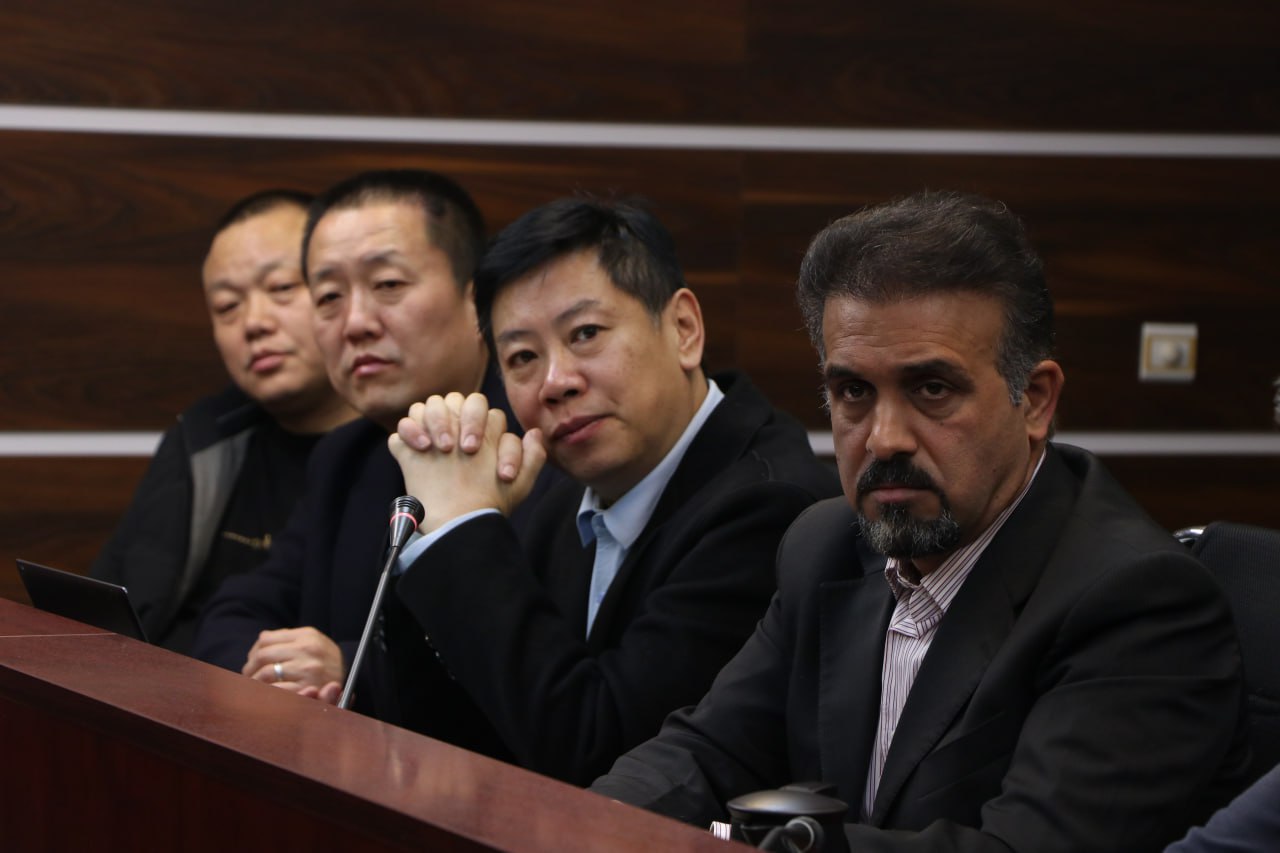
Yazd Chamber of Commerce’s Oil, Gas, Energy, and Petrochemical Commission convened a meeting focused on innovative solar panel production technologies, attended by representatives from China and local industry stakeholders.
Ali Farshadpour, a member of the commission, stated that despite existing energy imbalances, solar energy and electricity generation through solar panels hold significant appeal. He emphasized that renewable energies are currently a central topic in the country’s industrial sector.
Farshadpour continued, “We must view electricity as a commodity. Considering the electricity shortage in the country, we should not treat it like foreign currency and lead it to a deadlock. The first step should be to set electricity prices based on global rates, and then any domestic or foreign investor willing to operate in this field should be welcomed.”
Regarding collaboration with Chinese companies active in this sector, he noted, “These companies must certainly present their cooperation model. It is also essential for them to register a company in Iran, and the private sector can manage and guarantee this. Currently, the province’s industrial units are ready to set up three to five-megawatt power plants, and it is necessary for the Chinese to trust the private sector.”
Farshadpour also stressed, “The Yazd Chamber of Commerce is prepared to send a team to China for on-site inspection and evaluation of these companies’ capabilities. If cooperation is to take place and currency is to leave the country, it should be done with open eyes and for high-quality products.”
Dehghan, the Head of the Economic Affairs Coordination Office of Yazd Governorate, said at the meeting, “Currently, the province produces 140 megawatts of solar electricity, making us the second-ranked province in the country in this regard. Approximately 1600 megawatts have also been allocated, but most of it remains at the level of permits and land allocation.”
Dehghan added, “The sites and infrastructure for these projects have been determined, but they have not yet been implemented and require the cooperation of the private sector. There needs to be a genuine determination within the private sector to continue the work. Permits and land should not be tied up, preventing new investments.”
The Head of the Economic Affairs Coordination Office of Yazd Governorate, while thanking the Chamber’s Energy Commission, emphasized, “We must align all players in the solar energy field. In this regard, the Yazd Chamber of Commerce has played a good coordinating role, reflecting problems and providing suggestions.”
Shifeng Yang, CEO of a solar panel manufacturing company, who had visited numerous solar energy equipment factories in China, stated, “Given the current conditions, our team is ready to support Iranian companies. The planned approach is for companies to provide the necessary infrastructure and space, and we will install all the panels, inverters, and other required equipment. This will be done under the supervision of the government sector. Costs will be paid after the sale of solar energy to the company.”
Yang added, “Our plan is high production with low profit margins. We are ready to equip solar power plants in Yazd from A to Z. As a first step, establishing and equipping three-megawatt power plants is on the company’s agenda, and of course, we need the investment and cooperation of Yazd companies and the private sector.”
Prediction of 700 Three-Megawatt Power Plants in the Country
Saeed Nouraimani, Deputy Economic Director-General of Yazd Province’s Department of Finance, pointed out the importance of solar energy despite the negative energy balance, stating, “The Governor of Yazd, in the Planning Council, called for the designation of several solar energy hubs for Yazd. Several investment centers and various investment models have also been identified. Regarding government guarantees for cooperation with Chinese companies, SATBA (Renewable Energy and Energy Efficiency Organization) regulations can be referenced, and the capacity of the stock market can also be utilized.”
Mohammad Javad Jalili, Deputy of the Electricity Distribution Company, referred to the cooperation between Iran and China, saying, “Based on the agreements made, 700 three-megawatt power plants are planned, with all equipment being imported from China and costs being settled through oil barter.”
Alireza Dad, an economic activist, mentioned SATBA’s latest directive, stating, “According to this directive, industrial units operating three shifts, two shifts, and one shift will not have their electricity cut off if their own power generation covers 80%, 60%, and 50% of their demand, respectively. In this regard, the Ministry of Energy is obliged to prepare the infrastructure.”
Shahram Shokoohi, secretary of the Yazd Chamber of Commerce’s Oil, Gas, Energy, and Petrochemical Commission, regarding the activities of Chinese companies in the renewable energy sector, said, “The proposals raised have some serious ambiguities, and if there is no mutual understanding, the project’s efficiency will be low. We suggest that the Chinese company announce its plan with all the detailed conditions and specify prices, efficiency, and the method of operation. Ultimately, this plan should become the basis for the private sector’s work in the province.”
Hamidreza Salehi, an economic activist, pointed to some hindering government regulations in the field of solar power plant construction, stating, “Iran, and especially Yazd province, has a suitable platform for establishing solar power plants. On the other hand, the thrifty and hardworking people of Yazd are also ready to work. However, unfortunately, government support is inadequate during severe energy imbalances, especially in the area of allocating suitable land.”
No comments have been sent yet!