

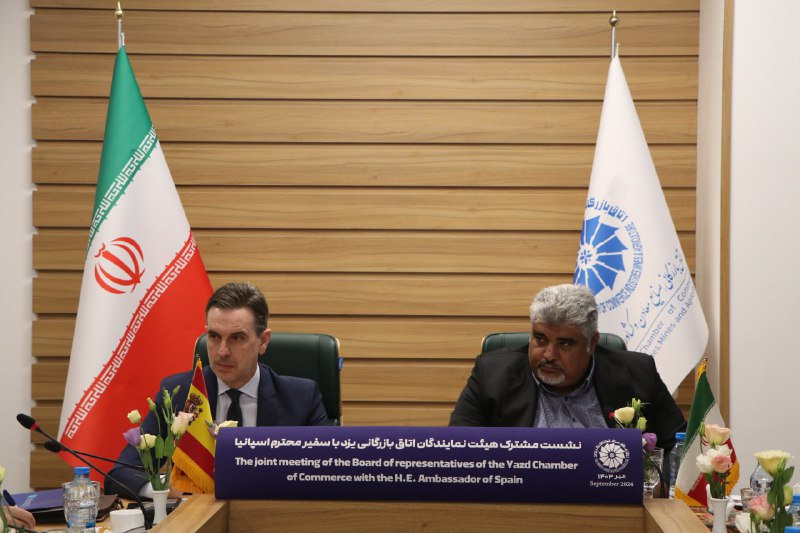
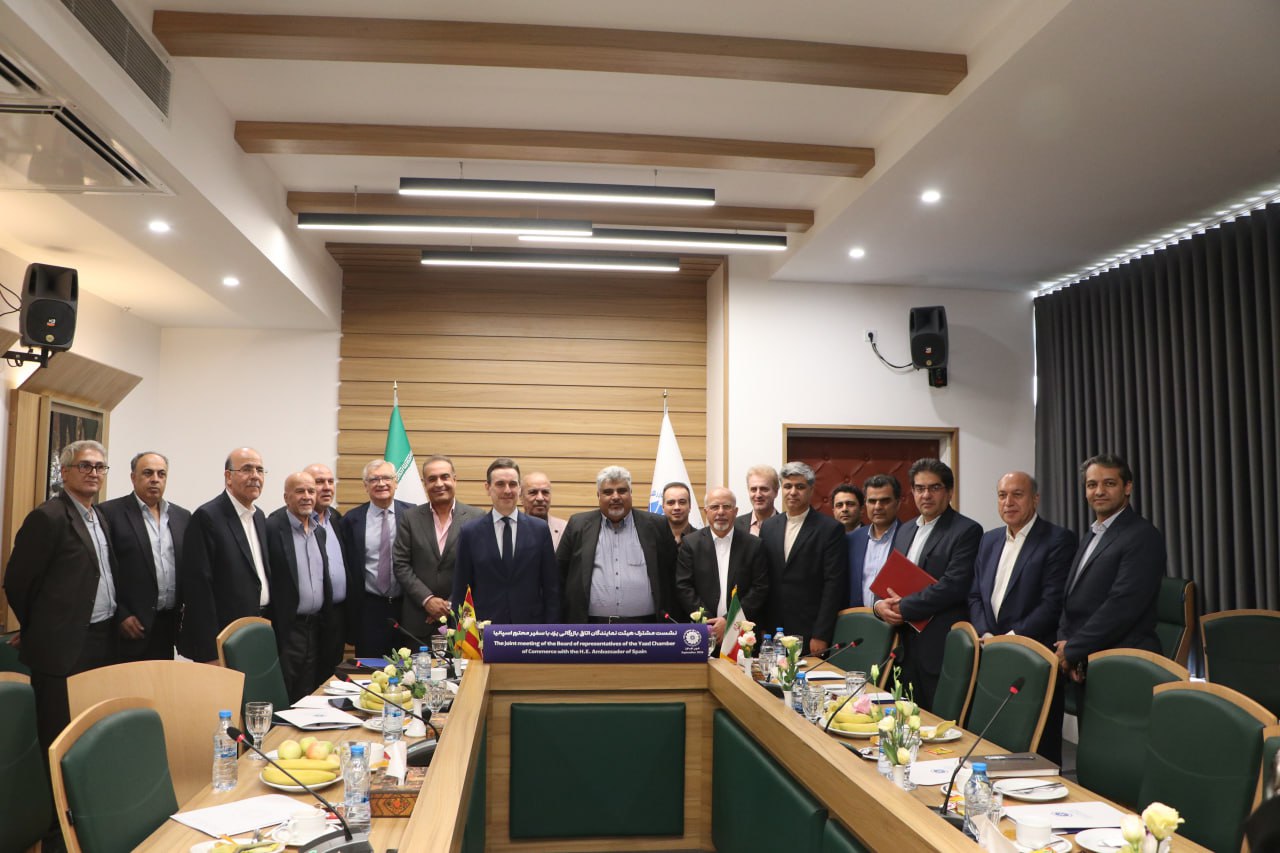
During the joint meeting of the board of representatives of the Yazd Chamber of Commerce and the Spanish ambassador, it was stated that strengthening joint cooperation would guarantee the progress of both countries.
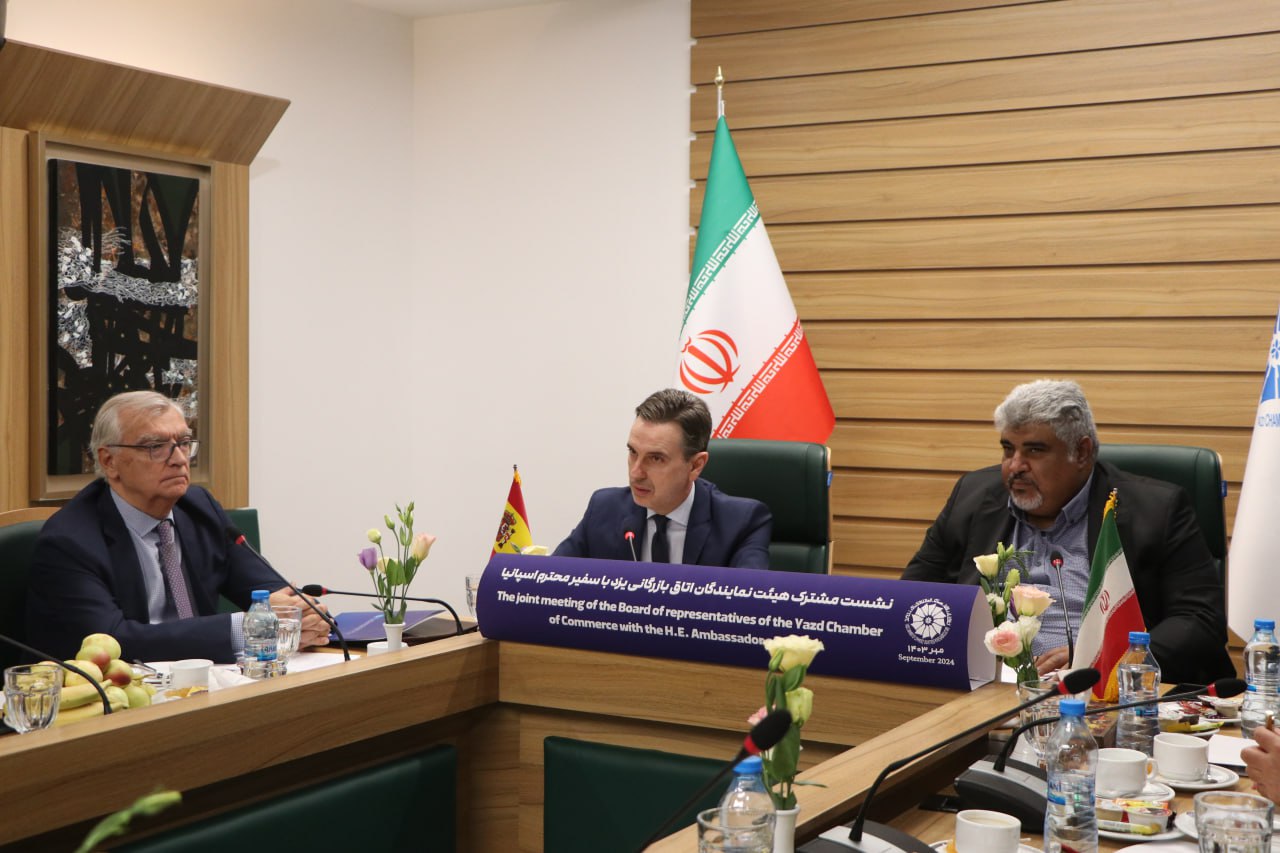
A joint meeting of the board of representatives of the Yazd Chamber of Commerce and the Spanish ambassador and commercial attaché to Iran was held.
During the meeting, while referring to the existing problems in the relations between the two countries, both sides emphasized the expansion of bilateral cooperation.
At the beginning of this meeting, the Head of the Yazd Chamber of Commerce, Industries, Mines and Agriculture, referring to Yazd as a World Heritage City registered with UNESCO, said: “This city is not only known for its amazing architecture and historical structure, but it also serves as a model of national unity and peaceful coexistence due to the history of peaceful living of followers of different religions throughout history.”
Mojtaba Dastmalchian stated that Yazd province, as one of the historical centers of trade in Iran, has a long history in the field of commerce and trade. Yazd is the fourth most developed industrial province in the country, where more than 800 types of goods are produced. This province ranks first in the production of tiles and ceramics, second in textile products, and third in steel products in the country.”
Regarding relations with Spain, he stated: “Yazd has had constructive relations with Spain in various fields, including the tile and ceramic industry, in the past, which led to the signing of a memorandum of understanding between the Yazd Chamber of Commerce and the Castellón Chamber of Commerce and Industry in 2010 with the aim of promoting economic relations. The Iran Ceramic Technology Development Center has also signed a memorandum of understanding with Spain.”
Dastmalchian, emphasizing the need to create grounds for interaction and the conclusion of a memorandum of cooperation between the Yazd Chamber of Commerce and one of the chambers of Madrid or Barcelona, added: “Since the issuance of visas, the presence of delegations from Iran at various exhibitions in Spain, as well as facilitating the twinning process with the city of Seville, require consultation, we request your support in these matters.”
Gazanfar Amirjalili, Vice President of the Yazd Chamber of Commerce, Industries, Mines and Agriculture, also pointed to the past relations between Iran and Spain at this meeting and emphasized: “We hope that economic and industrial relations between Yazd and related provinces in Spain will improve in the future to resolve problems. Your presence is valuable for expanding these relations. We hope that these relations will develop further in the future, especially in the tourism industry.”
Mohammad Taghi Khalegieh, a member of the board of representatives of the Yazd Chamber of Commerce, Industries, Mines and Agriculture, referring to trade relations in the field of tiles and ceramics with Spain, said: “These interactions and partnerships with Spain existed in the field of ink production; however, this cooperation has been cut off since this summer. Spain’s approach to these collaborations should be economic so that we can resume interactions.”
Hamidreza Sharafat, a member of the board of representatives of the Yazd Chamber of Commerce, Industries, Mines and Agriculture, pointed out: “Yazd province is the first province in the country in terms of the diversity of mineral resources. We have about 40 types of minerals in Yazd province. In the field of metallic minerals, we are also one of the good provinces in the country in terms of reserve volume, and we also have good potential in terms of precious metals. The private sector is also very active in this field. These cases can provide grounds for joint cooperation between the two countries. It is necessary to form a joint committee and determine the type and extent of cooperation.”
Hossein Pahlavanpour, Head of the Agriculture Commission of the Yazd Chamber of Commerce, Industries, Mines and Agriculture, also said: “Given Spain’s climatic conditions, it has been successful in the field of agriculture, and there has been cooperation with Iran in this regard. Yazd is also the oldest province active in pistachio cultivation, so we can have joint cooperation regarding the experience of planting and harvesting this product.”
Ahmad Eshghan Malek, a member of the board of representatives of the Yazd Chamber of Commerce, Industries, Mines and Agriculture, pointed to Yazd’s potentials in the field of petrochemical production at this meeting and said: “Currently, there is no direct communication with Spain, and raw materials are exported to Spain through other countries. We hope that in the near future, with the support of the Commercial Attaché of the Spanish Embassy, we can create grounds for expanding cooperation.”
Asghar Agha Nabil, Head of the Tourism Commission of the Yazd Chamber of Commerce, Industries, Mines and Agriculture, also said: “There are many commonalities in the field of culture and art between Yazd and Spain.”
He continued: “The desert of Yazd is attractive to Europeans, and the hospitable people of Yazd welcome Spanish tourists. We invite Spanish tour operators to see Iran and Yazd. We will also use their experiences to expand relations.”
Mohammad Hossein Cheshm-Be-Rah, a member of the board of representatives of the Yazd Chamber of Commerce, Industries, Mines and Agriculture, also called for the development of trade relations with Spain, especially for the purchase of parts, supplies, and machinery.
Abbas Ali Motevasseliyan, a member of the board of representatives of the Yazd Chamber of Commerce, Industries, Mines and Agriculture, pointing out that the main mission of attachés and embassies is to strengthen trade relations, said: “Currently, these relations between Iran and Spain have decreased significantly. We hope that this mission will be revived.”
He pointed out: “Yazd province has a high capacity in the production of petrochemical and polymer materials. Spain is also active in the production of UPC pipes, and its uses are in the fields of agriculture and water supply. Given the depreciation of the country’s machinery, the future relationship between Iran and Spain can be the transfer of technology and technical knowledge.”
The Necessity of Concluding Memorandums of Understanding in Various Fields with Spain
Javadianzadeh, Head of the International Center for Qanats and Historical Water Structures, also referred to Yazd’s location and its low rainfall and said: “The province’s rainfall is less than 100 millimeters, and this has led the people of Yazd to pay attention to water and agricultural productivity because productivity has been synonymous with survival.”
Referring to the 2,000 living qanats in Yazd, Javadianzadeh emphasized: “From this perspective, Yazd is similar to the southern regions of Spain, such as Galeria or Aquada, which helped agriculture and mining in Spain.”
He suggested: “Given the activity of 4 water museums in Spain, a memorandum of understanding can be exchanged for research discussions on the water history of the two countries. Joint studies on qanats, as well as the transfer of greenhouse cultivation technology from Spain and the establishment of a multi-purpose farm with the aim of agricultural tourism, are other proposals worth considering.”
Mousavi, the representative of the Ministry of Foreign Affairs, also emphasized that relations between Iran and Spain were very good before the sanctions against Iran and said: “Currently, trade relations have decreased significantly. In addition to the problem of sanctions, the existence of banking problems has also prevented our industries from trading with Spain.”
Referring to the fact that the economic commission of the two countries has not been held for some time, Mousavi stated: “One of the ways of cooperation currently between the chambers of commerce of Spain and Iran is the conclusion of memorandums of understanding so that economic actors and private companies of the two countries can get to know each other better.”
Seyed Ali Akbar Kalantar, Head of the Yazd Province House of Industry, Mining and Trade, pointed to Yazd’s potentials at this meeting and said: “Yazd province is the fourth industrial and the second mining province in the country. Yazd has large mining industries and is a leader in tiles, ceramics, glass, etc. Spain is also an industrial country, so the level of interactions can be increased.”
Kalantar emphasized: “We have had prior experience of cooperation with Valencia. Good understandings were also reached, and we hope that these collaborations will be revived. To begin, trips can be planned for members of unions and organizations of the two countries to identify areas of cooperation.”
Hosseini, Head of the Yazd Agricultural and Natural Resources Engineering Organization, also said at this meeting: “There is a great cultural affinity between Iran and Spain; however, joint cooperation can also be pursued in the field of agricultural activities. We request that we be able to communicate with our similar organizations in Spain. Also, the possibility of agricultural sector investors from the province visiting Spanish projects (agricultural tourism tours) should be provided.”
Hosseini emphasized: “Spanish greenhouse facilities have very high quality, reduce energy consumption, and increase productivity. Agricultural inputs such as pesticides, fertilizers, and seeds also have high quality in Spain; however, intermediaries must be eliminated so that these products enter the Iranian market at a more reasonable price, and operators have more incentive to use them.”
Hydroponic greenhouse facilities as well as mega-farms were other cases that Hosseini raised to create grounds for joint cooperation.
Yazd and Spain Share Many Commonalities
The Spanish Ambassador said during this meeting: “I am very pleased that Yazd is my first destination as the Spanish Ambassador; not only because of the rich and registered history and culture of this city, but also because Yazd is one of the dynamic industries in the Iranian economy.”
Antonio Sánchez Benedito continued: “We both share many commonalities, old nations with a rich history, so that I feel at home. On the other hand, in Spain, through Andalusia, we are familiar with Islam and Muslims. In Yazd, the peaceful coexistence of religions can be a good model for the world.”
He added: “Spain plays a key role in the world economy. It is the fourth largest economy in Europe and the second country in terms of tourism, welcoming tourists equal to twice its population annually.”
Referring to the fact that in some cases they have common climatic conditions, including deserts, the Spanish Ambassador to Iran said: “There are many potentials in Yazd, and many of the issues raised are in the field of production. Among the sectors mentioned, textiles, tiles and ceramics, water management, food, and renewable energies all exist in Spain, and we are willing to share these experiences and benefit both sides.”
He continued: “It is the duty of myself and the Commercial Attaché to facilitate economic relations between the two countries. Our job is to expand and deepen relations between the two countries. There have been previous agreements between Iran and Spain, and the revival of these agreements should be on the agenda. Although official statistics do not always show the amount of exports and relations, it is undeniable that our economic relations have decreased.”
He also referred to the issue of visa issuance and said: “As a member of the European Union, Spain has responsibilities regarding visa issuance; however, if the goal is trade, we will try to facilitate this process.”
The Commercial Attaché of the Spanish Embassy in Iran, also pointing out that this is just the beginning of our communication, emphasized: “The conditions are ripe for cooperation between the two countries in industrial fields.”
Íñigo Gil-Casares Armiño added: “We have the Commercial Office of Spain in Iran, and it will strive to facilitate this communication and connect the private sectors of Iran and Spain.”
He referred to the common experiences of both countries, especially in the field of water management, and said: “We also believe that every drop of water is gold. Cooperation opportunities can be created in the energy sector, as well as in diversified agriculture and the sale of machinery.”
He also mentioned two upcoming webinars in Spain on tile and ceramic machinery and mining machinery and invited industrial activists from Yazd to participate in them.
The expansion of bilateral cooperation in the fields of greenhouse tourism, water consumption management, the tile and ceramic industry, petrochemicals, the transfer of technology and knowledge, etc., were among the most important topics emphasized by both sides.
During a two-day trip to Yazd, the Spanish Ambassador and Commercial Attaché to Iran will become acquainted with the potentials of this city and examine the capacities for establishing new collaborations.
 Related news
No comments have been sent yet!